DIFC: Dubai International Financial Centre
A financial and residential district between Trade Centre and Downtown, combining offices, apartments, Gate Avenue, galleries and Gate Village dining. Its established urban setting is distinct from the future DIFC Zabeel District expansion.
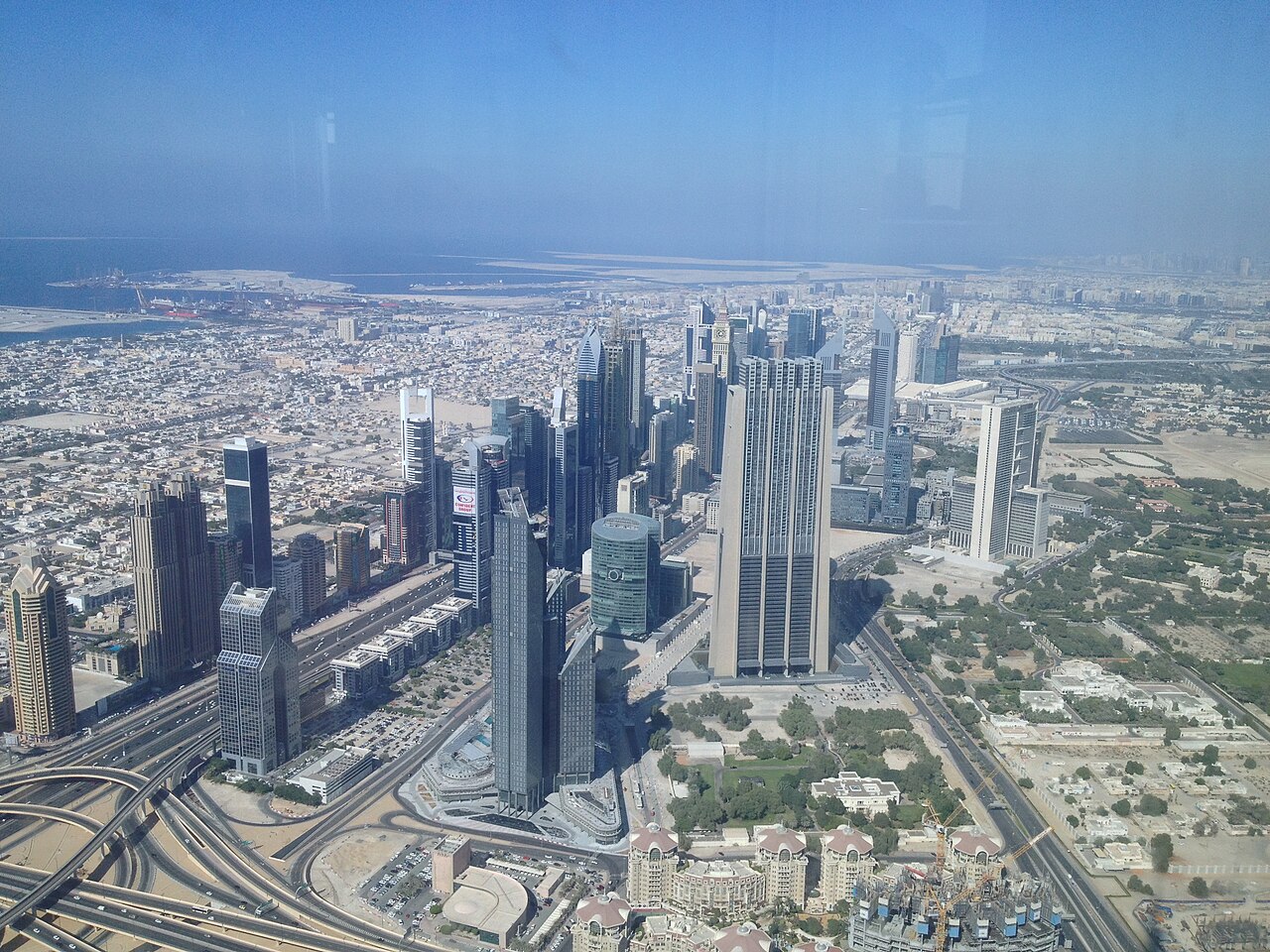
A business district with residential life
Dubai International Financial Centre, or DIFC, combines offices for financial and professional firms with homes, hotels, restaurants and cultural spaces. It lies beside Sheikh Zayed Road between Trade Centre and Downtown Dubai. The Gate Building and surrounding development create a recognisable business centre, while everyday activity extends beyond office floors. Apartments, shops, cafés and galleries sit nearby. This mixture keeps DIFC connected with city life during the working day and into the evening. Business nevertheless remains central to its character: residential buildings belong to a dense central setting in which meetings, visitors and urban services are regular parts of the surroundings.
Gate District, Gate Avenue and Gate Village
Three main names describe different parts of established DIFC. Gate District contains the business core and Marble Walk, with shops, cafés and services. Gate Avenue combines retail, dining, wellness and walking connections between parts of the community. Gate Village is associated with its architecture, restaurant terraces, galleries and auction houses. Pedestrian routes connect these areas, while each has a different daily character. Some spaces are more closely tied to office movement, others to dining and cultural visits. This internal structure is more useful for understanding residential life than the image of a single office skyscraper: DIFC consists of several connected urban centres.
Apartments in Index Tower, Limestone House and beyond
Housing in DIFC is predominantly apartments. Index Tower combines residential and commercial uses, while Limestone House offers a lower-rise form of development. Liberty House, Sky Gardens, Burj Daman and Park Towers add other residential addresses. Formats include studios, family apartments and penthouses. Architecture, entrances and shared facilities differ between buildings: some belong to mixed-use complexes, while others have a more distinct residential component. Apartments sit close to offices, hotels and urban retail. The housing stock therefore makes it possible to live within the business centre while retaining meaningful differences between individual buildings and their immediate surroundings.
Galleries, restaurants and evening life
Gate Village brings together restaurants, art galleries and auction spaces. Culture is integrated into the business district rather than placed in a separate museum quarter. Restaurant terraces, cafés and hotels sustain evening activity after the working day. Gate Avenue adds more everyday dining, shopping and meeting places. DIFC therefore supports several patterns: a working lunch, an errand on the way home, a gallery visit or a separate restaurant evening. This active urban character is an important part of its residential setting. Homes sit near both practical services and destinations that attract people from elsewhere in Dubai.
Everyday services and families
DIFC’s retail and service spaces include groceries, personal care, fitness and wellness. Hummingbird Early Learning Centre is in Gate District, Building 5, offering early-years education through the EYFS framework. School journeys for older children extend beyond the financial centre. Residential buildings provide their own shared infrastructure, with the facilities depending on the development. Family life takes place in apartments and shared urban spaces, using walking connections and services between buildings. This is a different pattern from a private house in a gated green community: culture, work and dining become visible parts of the everyday surroundings.
Metro and the central location
DIFC connects with the Metro Red Line through Financial Centre and Emirates Towers stations. Gate Village sits near Emirates Towers, with different parts of the community having their own station and street approaches. Sheikh Zayed Road provides a major road connection, while Downtown, Dubai World Trade Centre and the Museum of the Future form part of the surrounding central geography. Within the district, pedestrian links connect Gate District, Gate Avenue and Gate Village. DIFC combines local walking with Metro and car journeys across the city. A residential building’s precise position shapes its relationship with the business core and transport routes.
DIFC Zabeel District: a future expansion
DIFC Zabeel District is a separate expansion project, distinct from the established Gate District. Its masterplan includes offices, homes, hotels, cultural and public spaces, and new pedestrian and green routes. The official programme anticipates the first tenants in 2030, with continued development through 2040. Its future parks, new residences and transport concepts therefore belong to planned surroundings rather than today’s infrastructure for every DIFC home. Existing residential life already draws on Index Tower, Limestone House and other buildings, Gate Avenue retail and the dining and cultural setting of Gate Village. The expansion adds a future chapter to that established community.
The character of life in DIFC
DIFC is relevant to those seeking a central urban setting where business combines with restaurants, art and apartments. It offers neither the Marina’s waterfront promenade nor villa neighbourhoods with private gardens. Instead, its setting includes walking connections between buildings, the Metro, shopping and cultural spaces among offices. Housing ranges from lower-rise Limestone House to tall mixed-use developments. Established buildings and places define DIFC’s current character alongside its future expansion plans. It is an apartment-based environment with a concentrated mix of city functions, where work and leisure can share the same neighbourhood as home.