Downtown Dubai
An Emaar district around Burj Khalifa, Dubai Mall and the fountain lake. Residential towers sit alongside low-rise Old Town, the boulevard and Dubai Opera, creating several different ways to live in the city centre.
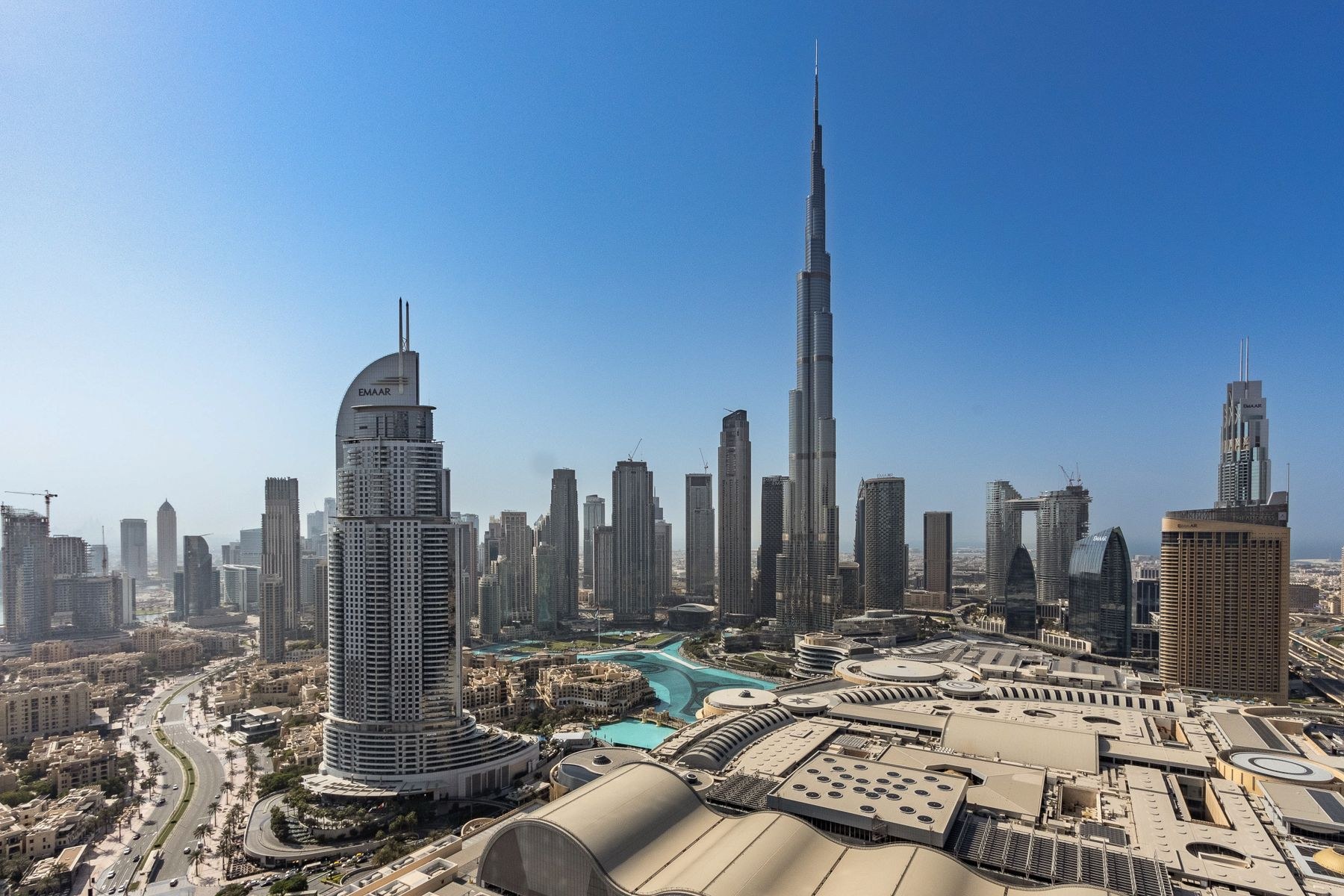
The layout of Downtown Dubai
Downtown Dubai is a large Emaar urban development combining homes with shopping, hotels and cultural attractions. Burj Khalifa, Dubai Mall and Burj Lake with Dubai Fountain form its central ensemble. Residential neighbourhoods surround them, connected by Sheikh Mohammed bin Rashid Boulevard and internal streets. Unlike a dedicated business district, activity continues beyond office hours: shopping, restaurants and evening performances bring visitors throughout the day. Downtown is also larger than the viewing areas beside the fountain. Southern residential developments, Old Town and the Opera District provide different settings within the same central address, each with its own relationship to the main landmarks.
High-rise residential developments
Most Downtown housing consists of apartments in residential towers. The Residences, South Ridge, Burj Views, The Lofts, Boulevard Heights and Burj Vista are different building groups with their own entrances and shared spaces. The district contains compact apartments, family layouts and substantial penthouses, with some developments also including podium homes. Opera Grand, for instance, combines one- to five-bedroom apartments with five-bedroom podium-level townhouses. Outlooks depend on a building’s position and an apartment’s orientation: boulevard, neighbouring-building, Burj Khalifa and lake views all occur within the same district. The shared address encompasses a variety of residential arrangements rather than one standard type.
Old Town: a lower-rise setting
Old Town provides a strong contrast with the surrounding towers. It is a modern residential development drawing on older Dubai architecture, rather than the historic Bur Dubai neighbourhood itself. Earth-toned materials, internal passages and low-rise buildings are complemented by some mid-rise blocks. Old Town is divided into Yansoon, Reehan, Miska, Zaafaran, Zanzabeel and Kamoon. Homes range from one to four bedrooms, with shared swimming pools, gardens and children’s play areas. The setting introduces another scale to Downtown: lower buildings sit close to major city landmarks while retaining a distinct architectural identity within the central masterplan.
The boulevard and Opera District
Sheikh Mohammed bin Rashid Boulevard connects residential developments with cafés, restaurants and hotels. It provides a street-based side of Downtown life beyond the mall. Dubai Opera adds a cultural landmark, hosting concerts, theatre, ballet and other stage programmes. Residential projects around it include Opera Grand, Forte, Act One Act Two and Il Primo. The combination of performances, dining and homes gives the Opera District a recognisable place within the wider centre. The boulevard and lakefront also have different roles: one supports everyday movement between buildings, while the other draws walking routes, performances and visitors around the main attractions.
Dubai Mall and Souk Al Bahar
Dubai Mall is a major shopping and entertainment hub whose influence extends across Downtown. Alongside shops and restaurants, it contains Dubai Aquarium & Underwater Zoo, a cinema and children’s entertainment spaces. Nearby Souk Al Bahar sits beside the lake and offers a different architectural and dining setting. It is home to Time Out Market Dubai, which brings together several food concepts. The district’s commercial infrastructure therefore combines a large mall with separate restaurants along the boulevard, in hotels and beside the water. Residents share this broad central-city choice with substantial numbers of visitors from elsewhere in Dubai and abroad.
The lake, fountain and Burj Park
Burj Lake creates an open setting at the foot of Burj Khalifa. Dubai Fountain uses it for music-and-light performances, with walking routes and restaurant terraces nearby. Burj Park adds green space beside the water, used for walking and city events. This differs from a large neighbourhood park among villas: open space here is part of a tourist and cultural centre surrounded by high-rise buildings. Shared pools, gyms and playgrounds within individual residential developments complement the public areas. Downtown therefore combines the smaller-scale spaces of home developments with major city attractions in the same surrounding neighbourhood.
Transport and everyday services
Burj Khalifa / Dubai Mall station on the Red Line connects to the mall through an enclosed pedestrian link. Road connections use Sheikh Zayed Road, Financial Centre Road and neighbouring city routes, with Business Bay and DIFC forming part of the nearby business geography. Within Downtown there are grocery shops, pharmacies, early-years facilities and medical services. Mediclinic Dubai Mall provides specialist outpatient care, diagnostics and day surgery in the mall. School and work journeys can extend outside the district while some practical errands remain local. The central location is supported by services distributed between residential developments and the shopping centre.
The character of everyday life
Downtown combines permanent homes with its role as one of Dubai’s main visitor destinations. Hotels, evening events, restaurants and visitor movement are normal parts of the surroundings beside residential towers. Old Town, South Ridge and the boulevard developments nevertheless offer different local settings. The district is relevant to those who want city architecture and access to culture, shopping and dining in central Dubai. In place of a private beach or large private garden, it offers apartments, shared building facilities, open spaces beside the lake and close proximity to major landmarks. These qualities define the everyday character of the district.