JBR: Jumeirah Beach Residence
Dubai Properties residential towers beside the sea, arranged in six neighbourhoods alongside The Walk and The Beach. JBR combines permanent homes with beach leisure, restaurants and hospitality next to Dubai Marina.
The seaside neighbour of Dubai Marina
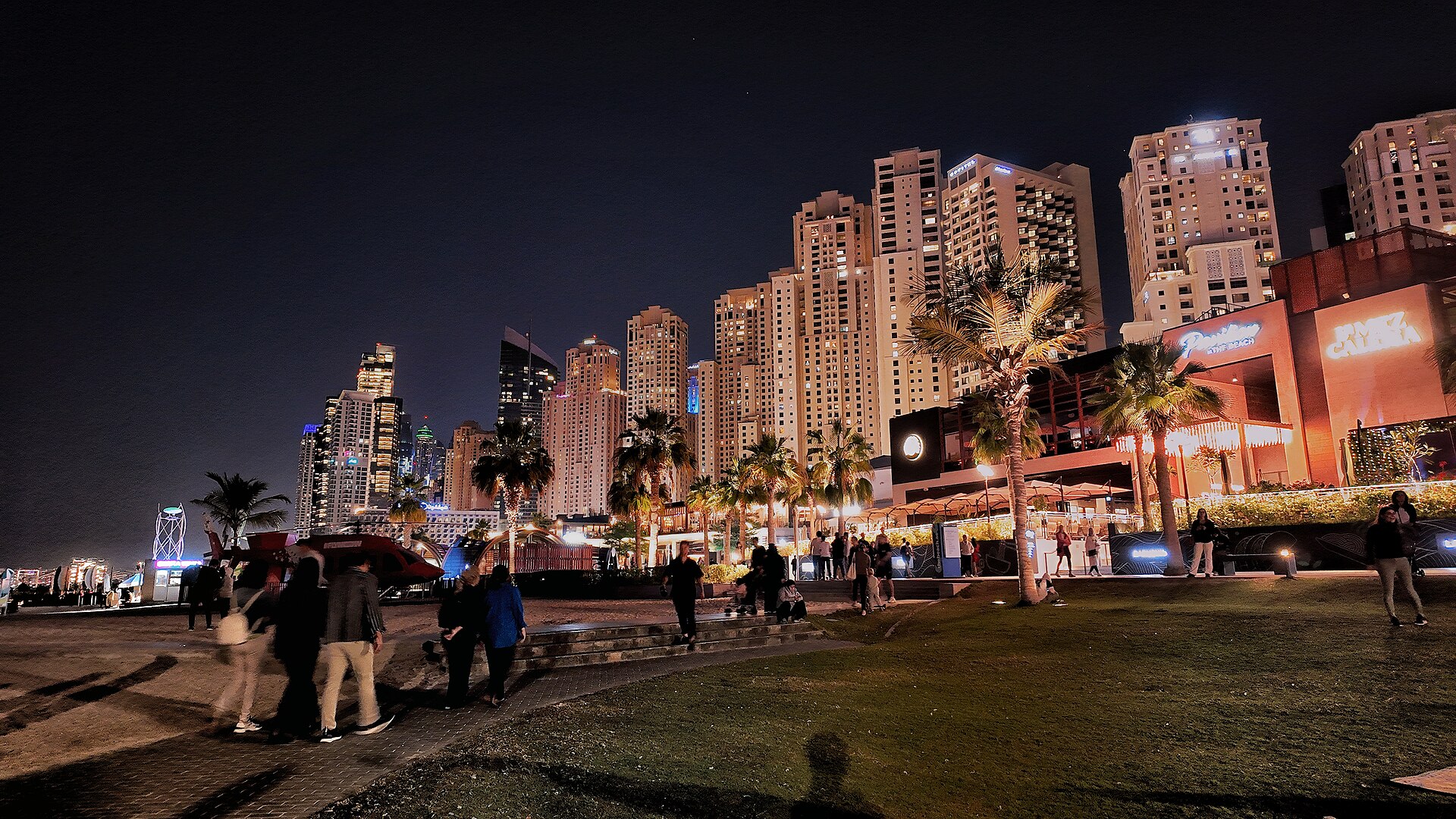
Jumeirah Beach Residence, or JBR, lies between Dubai Marina and the sea. Its development faces the beach and the urban promenade, while neighbouring Marina is organised around a yacht harbour. High-rise residential buildings sit alongside hotels, restaurants and shops. Mediterranean and Arabian influences give the main ensemble a recognisable appearance among the surrounding glass towers. JBR serves both permanent residents and substantial numbers of visitors. Beach leisure, walking, shopping and evening dining share the same urban setting, with activity continuing after the working day. This combination of homes and visitor destinations defines the community’s everyday character.
Six residential neighbourhoods
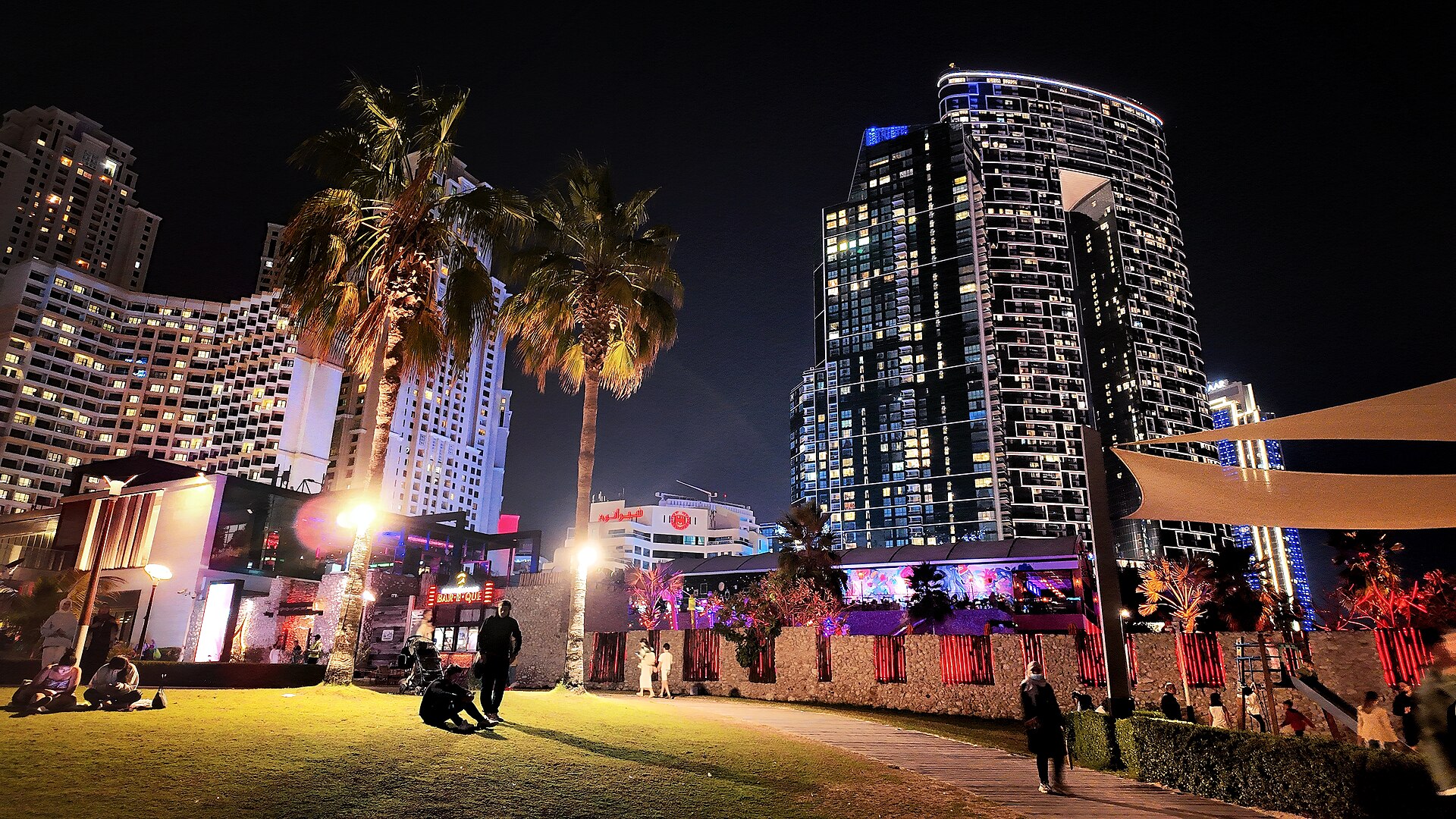
JBR’s main residential development is divided into Shams, Amwaj, Rimal, Bahar, Sadaf and Murjan. These are tower groups with their own vehicle approaches, parking and shared residential spaces. Apartment outlooks face different directions, including the sea, Dubai Marina, neighbouring buildings and internal grounds. Streets, podiums and residential entrance levels create several layers within the dense development. A neighbourhood name helps locate an address within JBR, while the individual tower determines its immediate surroundings. Behind the shared architectural ensemble, layouts, height and positions relative to the beach, tram and promenade continue to vary.
Apartments and shared facilities
JBR housing ranges from studios to family apartments and substantial penthouses. Residential developments provide shared pools, gyms and parking, while balconies and room orientation connect homes with the surrounding city or sea outlook. This is apartment living beside an active coast rather than detached villas with private shoreline plots. Shared passages, streets and public areas lie between homes and the beach. The format combines building facilities with numerous nearby venues. Grocery shops, cafés and practical services complement the visitor-facing side of JBR and support the people who live in the community throughout the year.
The Walk and The Beach
The Walk is JBR’s shopping and dining street, with cafés, shops and restaurants integrated among hotels and residential buildings. The Beach is a separate waterfront retail and leisure destination closer to the sand. It includes restaurants, shopping and Roxy Cinemas, while Pavilion brings dining venues together beside the sea. The two names often appear along the same outing but refer to different parts of the coast. Together they form an active public-facing strip between the residential towers and beach. Individual services, beach venues and dining concepts have their own operators and access arrangements.
The beach and connection with Bluewaters
The sea is JBR’s main open landscape. Beach time, water activities and waterfront walking share views towards Bluewaters and Ain Dubai. A pedestrian bridge connects the coastal area with Bluewaters Island, adding a separate route to island restaurants and attractions. Bluewaters is nevertheless a community in its own right, rather than another JBR residential cluster. Dubai Marina lies on the other side, with walking routes around its harbour. This position gives JBR access to several different waterfront settings: the open sea, an island and the yacht marina, while preserving its own beach-oriented character.
Tram, Metro and everyday journeys
Dubai Tram serves JBR through Jumeirah Beach Residence 1 and 2 stops. It connects the community with other parts of the Marina and Metro Red Line interchanges at DMCC and Sobha Realty. Car journeys use local coastal streets and approaches towards Sheikh Zayed Road. Within JBR, walking links connect homes, shopping and the shore, while school and work journeys may extend elsewhere in Dubai. The community combines urban services with beach infrastructure while retaining a dense high-rise coastal character. Hotels, visitors and restaurants remain part of the everyday surroundings of permanent residents.