Start with the boundary, not the furniture
An open area beside an apartment is not fully described by the word terrace. Request the plan, property documents and management rules: where does the unit end, which part is common property, and on what basis can you use it? Compare the drawing with the actual door, boundary and neighbouring areas. In its The Greens & Views FAQ, ECM specifically says common property cannot be used permanently by one individual. This is a community example, not a conclusion about every Dubai terrace. Chairs placed outside by a seller are not evidence of exclusive use before the documents establish it.
Try the way you actually want to use it
Write down why you want outdoor space: morning coffee, working with a laptop, plants or a short break outside. At the viewing, consider usable depth, door movement and circulation around your intended furniture without obstructing exits. Observe the sun, noise and sightlines from neighbouring homes; where possible, return at the time you expect to use the area. One quiet evening does not establish permanent quiet, and a sunset photograph does not explain daytime conditions. Wind and the actual floor surface need observation too. Neither the floor number nor facade direction alone promises a comfortable outdoor routine.
Glazing and shade are separate permissions
Do not budget for turning an open balcony into another room before checking whether the change is permitted and what approvals apply. For The Greens & Views, ECM prohibits external modifications changing apartment aesthetics and refers residents to Home Modification Guidelines. Emaar Beachfront guidance separately prohibits balcony coverings including awnings, pergolas and screens. These are rules for the named communities, not one citywide list. ECM’s Reem guidance also directs balcony questions to the Community Rules. Request the documents applying to your own building and a written answer about the actual proposal, rather than relying on a neighbour having done something similar.
Child safety is a separate selection question
If children will live in the home, discuss balcony access and the condition of the door and guarding with management and an appropriate professional before committing. Do not test a railing by leaning against it or attempt a repair yourself. Ministry of Interior guidance published by Abu Dhabi Police on 25 November 2011 stresses supervision and keeping furniture away from windows because children can climb it. This is longstanding basic guidance, not a new Dubai rule or an assessment of this apartment. An insect screen is not protective guarding. Suitable protective arrangements need professional assessment and any necessary approvals.
Check cooking, storage and laundry separately
A large outdoor area does not permit every household use. ECM’s Emaar Beachfront guidance prohibits balcony barbecuing, storage and laundry hung on railings. Dubai Hills Estate barbecue guidance distinguishes villas from apartment communities, where barbecuing is permitted only at designated stations. Do not transfer a villa-garden arrangement to an apartment balcony or the next tower. Before buying furniture or equipment, obtain your building’s current rules, including storage, smoke, externally visible items and the process for complaints. This article supplies no citywide fine schedule and cannot replace management rules or the written conditions applying to your chosen home.
Plants, water and heavy objects need checks
Before adding large planters, decking, equipment or heavy furniture, ask management and a suitable professional about the proposed placement. Terrace size does not establish structural capacity, and a photograph cannot support a loading calculation. At the viewing, note visible water marks, the floor surface, threshold and access to drainage points; request the history of complaints and repairs. Do not flood-test the area or lift the finish yourself. A professional should identify the cause of marks and the appropriate repair. Separately establish who maintains each element under the building documents and how a problem is logged, rather than borrowing assumptions from another property.
A photograph is not permission
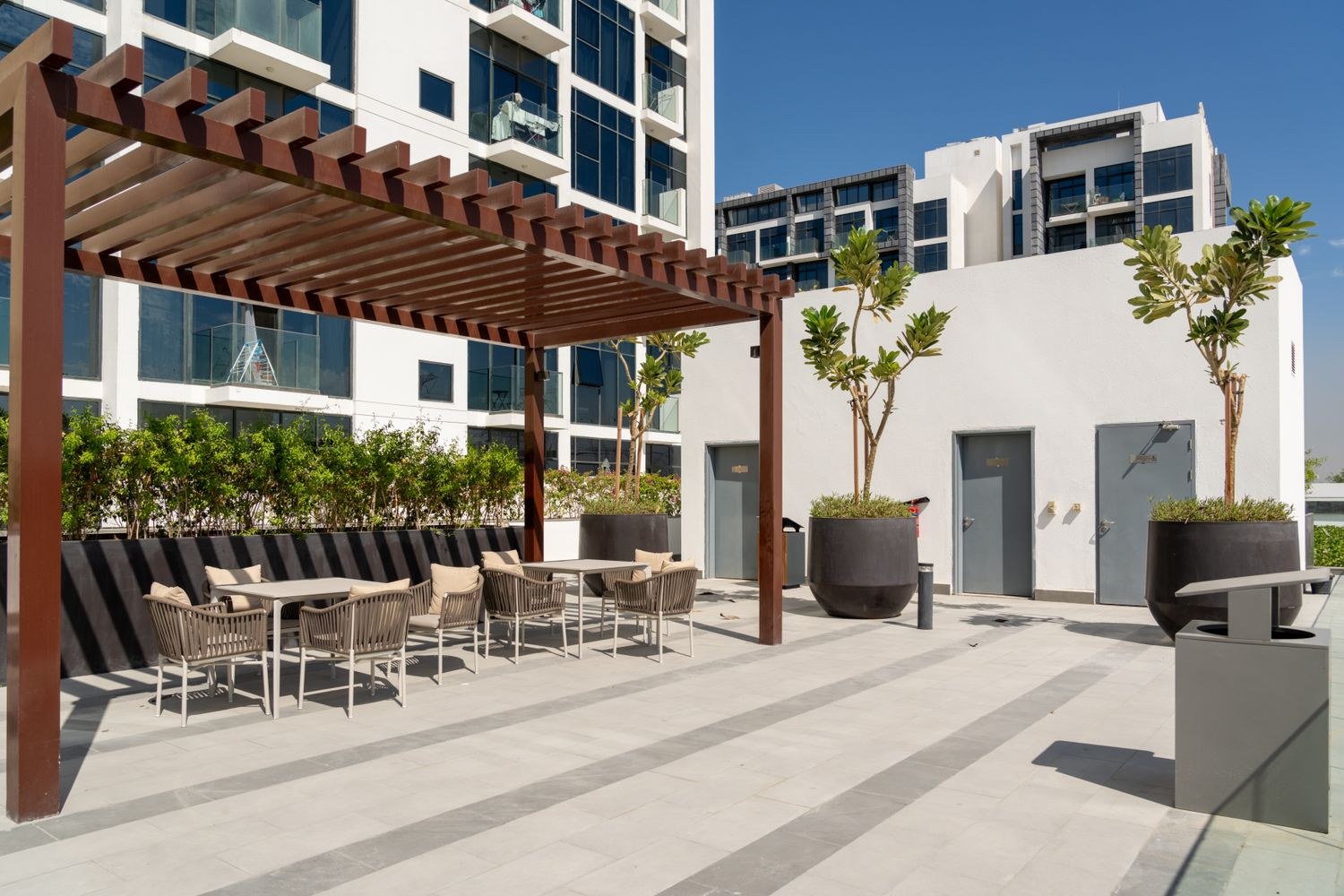
The illustration shows an outdoor area in Dubai photographed in October 2024. It is a topic example, not an offered property or proof that the same pergola, planting or furniture is permitted at your home. Likewise, a marketing render does not confirm the actual surface, privacy or view after neighbouring works finish. Compare your chosen apartment with its documents and real condition, separating existing equipment from future promises. If the seller is leaving terrace items, list them in the agreed terms and check permissions separately. Ownership of the furniture does not automatically establish approval for a disputed structure.
Bring the answers into one short file
Before deciding, collect the plan and basis of use, current rules, responses about intended changes, professional observations and the agreed inventory of items staying. Separate confirmed points from unanswered questions. For a rental, discuss any proposed work with the owner as well; owner consent does not replace other necessary approvals. If the apartment’s main attraction depends on unapproved glazing or exclusive use of a common area, keep that as an unresolved check rather than an established advantage. Useful outdoor space is defined by actual access, permitted use and understood maintenance, not merely the area stated in the listing.